


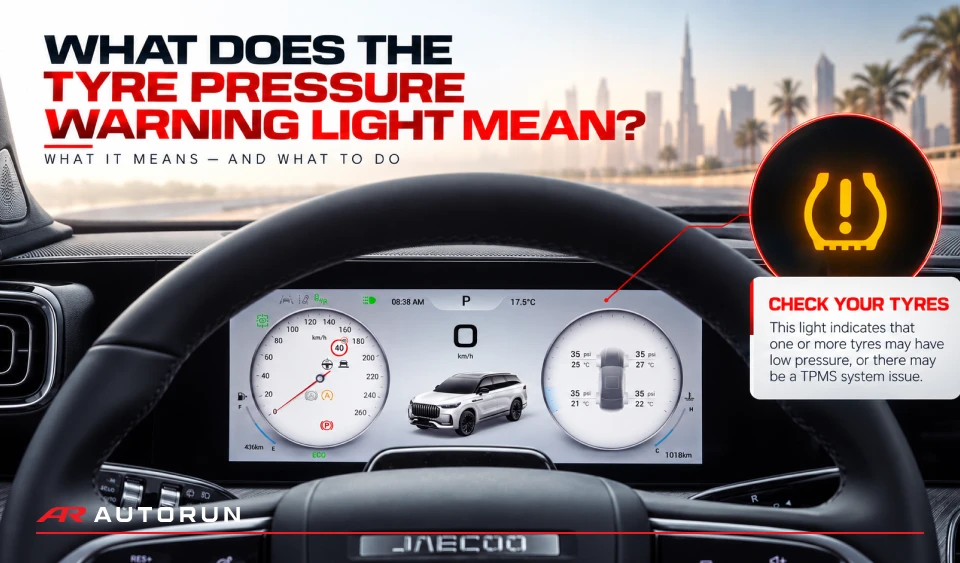
A steady tyre-pressure warning light usually means one or more tyres are underinflated. A light that flashes before staying on may indicate a fault with the monitoring system.
The yellow symbol typically resembles a horseshoe with an exclamation mark inside. It belongs to the Tyre Pressure Monitoring System (TPMS), which alerts you to pressure problems that may not be obvious from how the car feels.
If it appears, check your tyres as soon as you can stop safely. Do not assume the warning is harmless because the vehicle still drives normally.
What Should You Do When the TPMS Light Comes On?
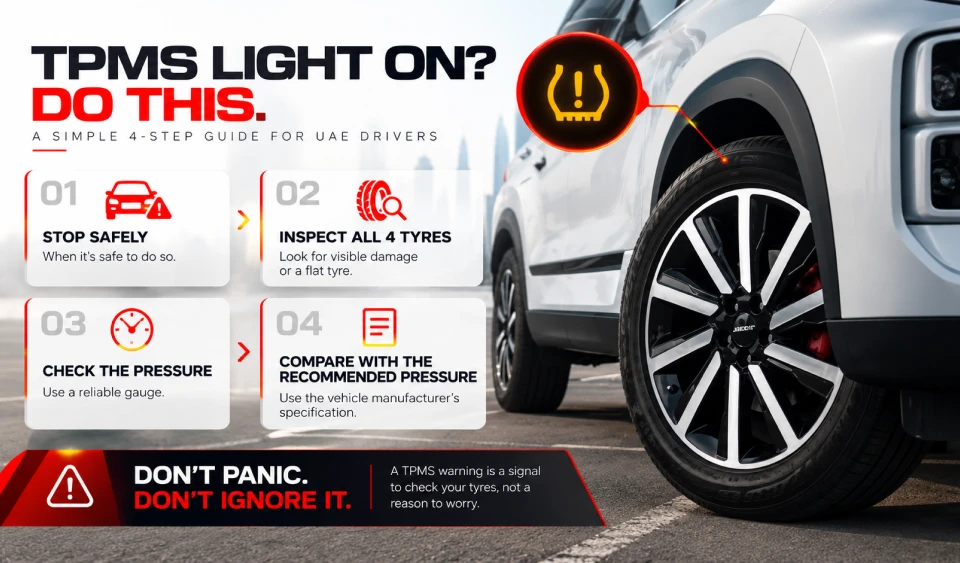
Ease off your speed, avoid abrupt braking or steering, and find a safe place to stop and assess the tyres.
- Look for obvious damage. Check for a flat tyre, cuts, bulges or other signs of a problem.
- Measure all four tyre pressures. Use a reliable gauge; appearance alone cannot confirm whether a tyre is correctly inflated.
- Compare with the vehicle’s recommended pressures. These are usually listed inside the driver’s door area or in the owner’s manual. Front and rear requirements may differ.
- Correct low pressure and check for recurring loss. If a tyre loses pressure again, have it inspected for a puncture, valve leak or wheel damage.
If a tyre is flat, visibly damaged or losing pressure rapidly, do not continue driving on it. Stop safely and arrange roadside assistance. The same applies if you experience unusual vibration, pulling or unstable handling.
| Warning behaviour | What it may mean | What to do |
|---|---|---|
| Stays on | One or more tyres may be underinflated. | Check pressures and inspect the tyres as soon as you can stop safely. |
| Flashes, then stays on | The TPMS may have a malfunction. | Check pressures manually and arrange a system inspection. |
| Appears on a cool morning, then clears | Pressure may be marginally low and rise as the tyres warm. | Check and adjust pressures when cold. |
Warning sequences vary by vehicle. Check your owner’s manual and any dashboard messages. A TPMS fault does not confirm that the tyres are correctly inflated.
The exact symbols and warning sequences depend on the vehicle. Consult its manual, particularly if the display also shows a message. A monitoring-system fault does not establish that the tyres themselves are correctly inflated.

Does UAE Weather Affect Tyre Pressure?
Yes. Tyre pressure normally rises as the air inside warms and falls as it cools. Driving also heats the tyres, so a reading after a motorway journey will usually be higher than one taken before setting off.
A cooler morning or seasonal temperature drop can therefore reveal pressure that was already close to the warning threshold. But temperature is only one possible cause: punctures, leaking valves and gradual air loss also reduce pressure.
Do not release air from hot tyres simply to match the recommended cold-pressure figure. They may become underinflated when they cool. Manufacturer guidance recognises the pressure rise during driving as normal.
When Should You Check Tyre Pressure?
For routine checks, measure pressure when the tyres are cold, generally after the vehicle has been parked for at least three hours. “Cold” means not heated by recent driving; it does not mean the weather must be cool.
Use the vehicle manufacturer’s recommended pressure, not the maximum pressure marked on the tyre sidewall. Check monthly and before long journeys, including any different recommendations for a fully loaded vehicle. Inspect the spare too, if fitted.
If a warning appears during a journey, do not postpone checking simply because the tyres are warm. Assess the problem promptly, then recheck the pressures when cold.
Why Is the Light Still On After Inflation?
Some systems update after the vehicle has been driven; others require a reset or calibration following the manufacturer’s instructions.
Do not reset the system just to hide the warning. First confirm that every tyre is correctly inflated and that none is losing pressure.
If the warning persists, possible causes include a sensor fault, a depleted sensor battery on a direct-monitoring system, or a calibration or sensor-recognition issue after wheel or tyre work.

When Should You Book an Inspection?
Arrange an inspection if one tyre repeatedly loses pressure, the warning flashes, or the light remains on after the pressures and any required reset procedure have been checked.
Correct pressure supports predictable handling, even tyre wear and efficient driving. TPMS is a useful warning system, but it cannot replace regular checks for damage and wear.
For an unresolved warning on your OMODA or JAECOO, book a service appointment with AUTORUN in Dubai to have the tyres and monitoring system checked.
