


Choosing between a five-seater and a seven-seater SUV sounds straightforward. If you have a bigger family, buy seven seats. If you do not, choose five.
In real life, especially in Dubai, the decision is a little more complicated.
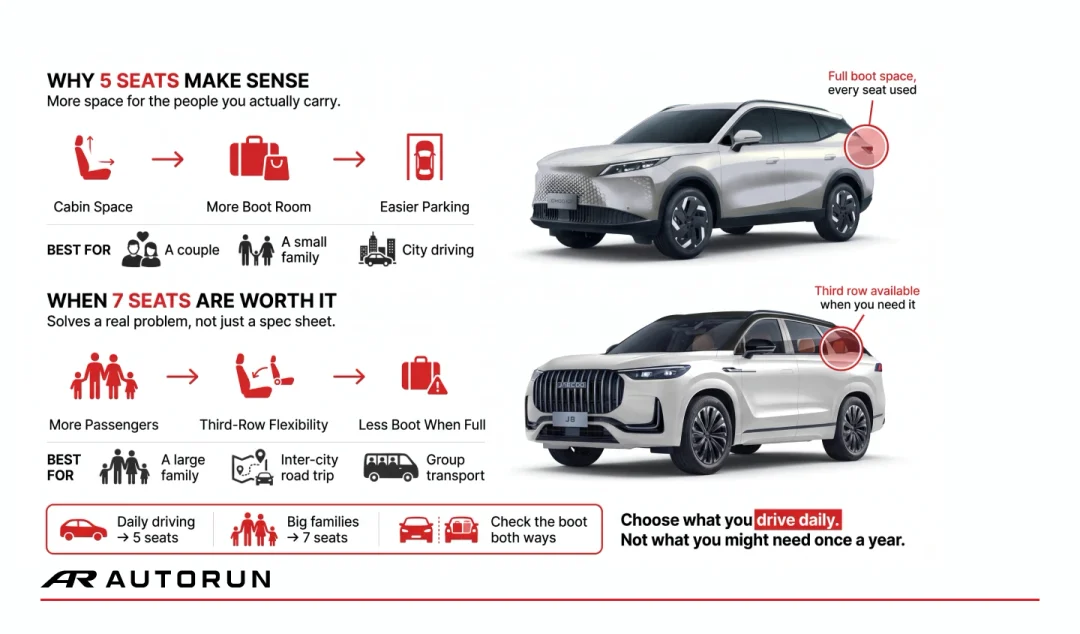
A third row gives you more flexibility, but it usually comes with a larger vehicle and less luggage room when every seat is being used. A five-seat SUV can be easier to park, more spacious for the passengers you actually carry every day and better suited to drivers who rarely need more than four or five seats.
In this guide, we look at the practical differences between five-seat and seven-seat SUVs, when that third row is genuinely useful, and which layout makes more sense for different types of UAE drivers.
5 Seats vs 7 Seats at a Glance
| Consideration | 5-Seater SUV | 7-Seater SUV |
|---|---|---|
| Daily city driving | Usually easier | Larger but still manageable |
| Passenger capacity | Up to 5 | Up to 7 |
| Third-row flexibility | No | Yes |
| Boot space with all seats occupied | Usually better | Usually reduced |
| Parking | Generally easier | Requires more attention |
| Best for | Couples and small families | Larger families and frequent passengers |
| Long family trips | Good | Better when extra seats are needed |
When a Five-Seater SUV Makes More Sense
For a surprisingly large number of Dubai drivers, five seats are enough.
If your normal journey involves one or two people commuting to work, a family with one or two children, or occasionally taking friends out, a third row may spend almost its entire life folded down.
Choosing a well-designed five-seat SUV can therefore give you more usable space without carrying around a feature you rarely need.
The OMODA O7, for example, is designed as a five-seat midsize SUV rather than trying to fit a third row into the rear. This allows more of the cabin to be dedicated to second-row passenger comfort and luggage space.
That type of layout works particularly well for:
- Couples who want more space than a compact crossover
- Families with one to three children
- Drivers who regularly carry luggage, sports equipment or shopping
- People who mainly drive around Dubai
- Buyers who do not expect to carry six or seven people regularly
There is also the everyday parking factor.
Dubai roads can easily accommodate large SUVs, but the vehicle does not spend its entire life on Sheikh Zayed Road. Mall basements, apartment parking, older areas of Dubai and tight ramps are where vehicle size becomes more noticeable.
A slightly smaller five-seat SUV can simply be easier to live with.
When Seven Seats Are Actually Worth Having
Seven seats become valuable when the sixth and seventh seats solve a real problem rather than simply looking good on the specification sheet.
Think about your normal week.
Do grandparents regularly travel with you? Do you have three or four children? Do you frequently drive relatives or friends? Are family road trips common?
If the answer to several of these is yes, the third row can make a big difference.
Instead of taking two vehicles, a seven-seat SUV allows more people to travel together. This can be particularly useful for airport trips, family outings, school runs and longer journeys between emirates.
The JAECOO J8 sits at the larger end of the current JAECOO range and is available with five- and seven-seat configurations, making it better suited to buyers who need that additional flexibility.
There is also the JAECOO J8 SHS for buyers looking at a larger electrified SUV rather than a conventional petrol model. The J8 SHS is positioned in the current lineup as a premium seven-seat hybrid SUV.
The important word, however, is need.
Buying seven seats because you might use them once or twice a year is different from having six people in the car every weekend.
Remember What Happens to the Boot
This is one of the easiest details to overlook in a showroom.
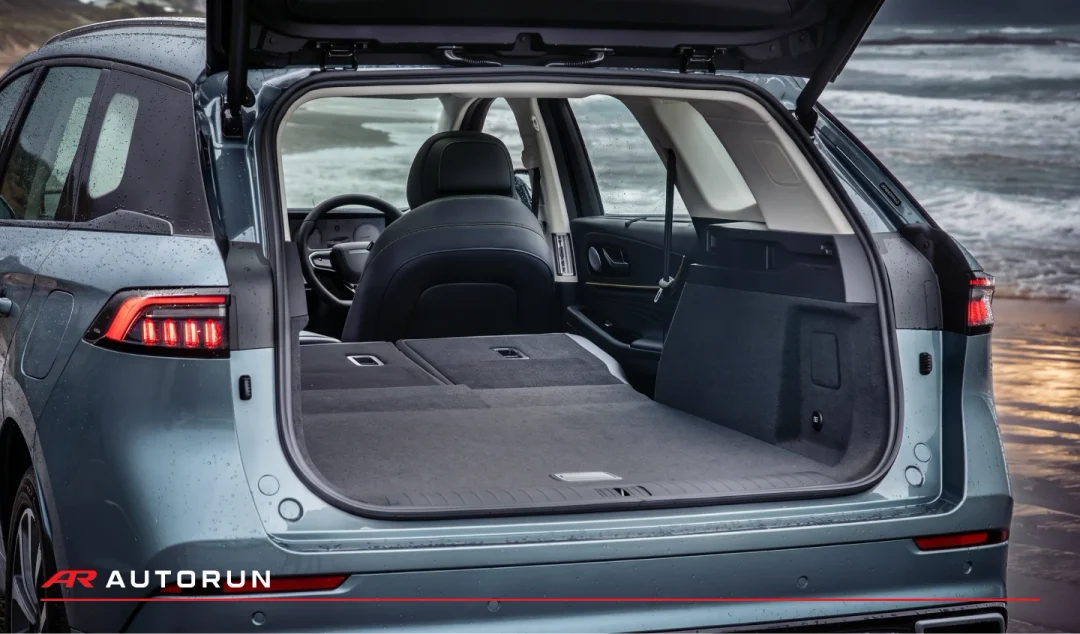
A seven-seat SUV can have a very large luggage area when its third row is folded. Raise those seats, however, and part of that cargo area becomes passenger space.
That matters when seven people also have seven people’s belongings.
For example, imagine an airport trip with six passengers. The SUV may technically have enough seats for everyone, but you also need room for several suitcases.
The same applies to family holidays, camping equipment, strollers and shopping.
Before choosing a seven-seater, check the boot in both configurations:
- Third row folded
- Third row in use
The second figure is often more important than buyers expect.
Not Every Third Row Is Equally Comfortable
Seven seats on a specification sheet do not automatically mean seven adults will be comfortable on a long drive.
Third-row seating varies considerably between SUVs.
Some are designed mainly for children or occasional adult passengers. Others provide substantially more usable space.
When viewing a seven-seat SUV, actually sit in the third row.
Check knee room, headroom, access, air-conditioning and how easily you can enter and exit. If you need to move the second-row seats dramatically forward just to fit someone behind them, consider whether that arrangement will work for your family regularly.
This is much more useful than simply confirming that the car has “7 seats.”
Think About Your Real Passenger Count
One useful way to make the decision is to forget your maximum possible passenger count and think about your normal passenger count.
If you normally carry:
1 to 4 people:
A five-seat SUV is usually the more logical choice.
4 to 5 people:
A spacious five-seater may still work better, especially if luggage space matters.
5 to 6 people regularly:
A seven-seater starts making much more sense.
6 to 7 people regularly:
Look seriously at a proper seven-seat SUV and pay close attention to third-row comfort and luggage capacity.
That simple calculation can stop you from buying more vehicle than you actually need.
Five Seats Can Sometimes Feel More Spacious Than Seven
A larger SUV does not automatically give every passenger more room.
In a two-row SUV, designers can use the available wheelbase and cabin length for five occupants and the luggage area.
With three rows, the same interior has another seating area to accommodate.
For families of four, this means a spacious five-seat model can sometimes feel more comfortable in everyday use than a seven-seater where the extra row is rarely needed.
This is why buyers should compare cabin layouts rather than simply comparing exterior dimensions.

Which Is Better for Dubai?
There is no universal winner.
For most individuals, couples and smaller families, a five-seat SUV offers a strong balance of passenger space, luggage capacity and city usability.
For larger families or households that regularly travel with more than five people, seven seats can be genuinely useful and may justify moving to a larger SUV.
Dubai also gives drivers a wide range of situations to consider. Your car needs to work in traffic and parking during the week, but perhaps also carry the whole family to Abu Dhabi, Ras Al Khaimah, Hatta or Fujairah at the weekend.
Choose based on the journeys you make regularly, not the one journey you might make once a year.
If you are still unsure, compare both layouts physically. Sit in every row, fold the seats, open the boot and imagine where your normal luggage, stroller or shopping would go.
That will tell you far more than the number beside “seating capacity” on a specification sheet.
For buyers comparing SUV sizes, the current OMODA & JAECOO range in Dubai includes everything from compact five-seat SUVs such as the JAECOO J5 through larger models such as the OMODA C7, JAECOO J7 and JAECOO J8. Seeing the vehicles side by side and taking a test drive is one of the easiest ways to understand which size actually fits your daily life.
