


When comparing car specifications, terms like Turbo, GDI, T-GDI, and Turbo-GDI can sound confusing. They all suggest modern performance, but they do not mean exactly the same thing.
A turbo engine uses a turbocharger to push more air into the engine. A GDI engine uses gasoline direct injection to deliver fuel more precisely into the combustion chamber. A Turbo-GDI engine combines both technologies.
This matters because the combination can deliver strong performance from a smaller engine, while also improving efficiency when driven properly. However, it may also require good maintenance, quality fuel, and more attention over time.
For UAE drivers, the choice is not only about horsepower. It is also about city traffic, highway driving, summer heat, fuel economy, service quality, and how the engine feels in daily use.

What Is a Turbocharged Engine?
A turbocharged engine uses a component called a turbocharger to increase engine power.
The turbocharger uses energy from the exhaust gases to spin a turbine. This turbine helps force more air into the engine. More air allows the engine to burn more fuel when needed, which can create more power.
The main benefit is that a smaller engine can produce power similar to a larger engine.
For example, a turbocharged 1.5-litre or 1.6-litre engine can often deliver stronger acceleration than many older naturally aspirated engines of a similar size.
This is why turbo engines are common in modern sedans, crossovers, SUVs, and performance vehicles.
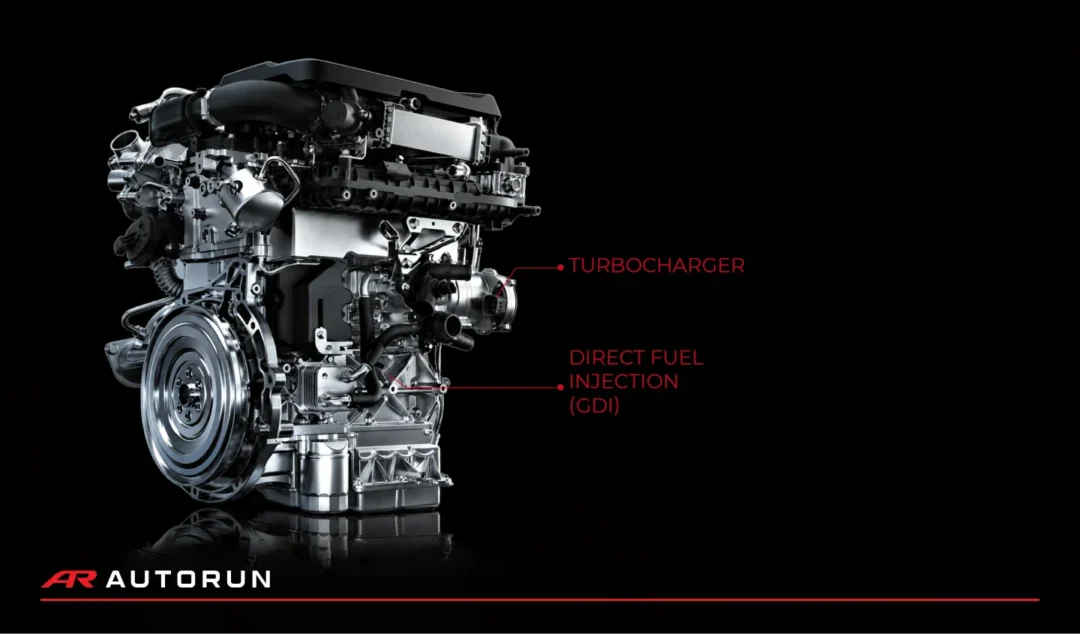
What Does GDI Mean?
GDI stands for Gasoline Direct Injection.
In a traditional port-injection engine, fuel is sprayed into the intake port before entering the combustion chamber.
In a GDI engine, fuel is injected directly into the combustion chamber at high pressure. This gives the engine more precise control over when and how fuel enters the cylinder.
This precise fuel delivery can help improve combustion, throttle response, power output, and fuel efficiency.
GDI is not the same thing as turbocharging. It is a fuel-injection technology. An engine can be GDI without a turbo, and an engine can be turbocharged without GDI.
What Is a Turbo-GDI Engine?
A Turbo-GDI engine combines a turbocharger with gasoline direct injection.
The turbocharger increases the amount of air entering the engine. The GDI system injects fuel directly into the combustion chamber with high precision. Together, they help the engine produce strong power from a smaller displacement.
This is why many modern engines are described as T-GDI, TGDI, Turbo-GDI, or turbocharged direct-injection engines.
The goal is simple: more power when you need it, better efficiency when you drive smoothly, and a more responsive feel in daily use.
Turbo vs Turbo-GDI: The Main Difference
The key difference is that “Turbo” describes air delivery, while “GDI” describes fuel delivery.
A regular turbo engine may use port fuel injection or another fuel-injection setup. A Turbo-GDI engine uses both a turbocharger and direct fuel injection.
In practical terms, Turbo-GDI engines are usually more modern and more precisely controlled. They can deliver strong low-end torque, quick acceleration, and better efficiency in certain driving conditions.
However, this does not mean every Turbo-GDI engine is automatically better than every regular turbo engine. The final result depends on the full engine design, transmission, software calibration, cooling system, fuel quality, and maintenance history.
Simple Comparison
| Feature | Turbo Engine | Turbo-GDI Engine |
|---|---|---|
| Main Technology | Turbocharger increases air intake | Turbocharger plus gasoline direct injection |
| Fuel Delivery | May use port injection or another system | Fuel injected directly into the combustion chamber |
| Performance | Strong power from a smaller engine | Usually more responsive and efficient power delivery |
| Efficiency | Can be efficient when driven smoothly | Can improve efficiency through more precise fuel control |
| Maintenance | Needs regular oil changes and turbo care | Needs regular oil changes, fuel-system care and possible carbon build-up attention |
| Best For | Drivers who want simple turbo performance | Drivers who want modern power, response and efficiency |

How Turbo-GDI Improves Performance
Turbo-GDI engines often feel strong because they combine air pressure and precise fuel injection.
The turbocharger helps the engine produce more torque, especially at lower and mid-range speeds. This can make the vehicle feel quicker when accelerating from a stop, joining a highway, or overtaking.
The direct-injection system helps control fuel delivery more accurately. This can improve combustion and make the engine feel more responsive.
For daily driving, this means the car may feel lively without needing a large engine.
This is especially useful in SUVs and crossovers, where drivers want smooth acceleration without excessive fuel consumption.
Fuel Efficiency: Is Turbo-GDI Better?
Turbo-GDI can be more efficient, but it depends on how the vehicle is driven.
When driven gently, a smaller Turbo-GDI engine can use fuel efficiently because it does not always need to work like a large engine. The turbo only delivers stronger boost when more power is required.
However, if the driver accelerates hard often, drives aggressively, or spends a lot of time in heavy stop-and-go traffic, fuel consumption can increase.
In other words, Turbo-GDI engines can be efficient, but they are not magic. Driving style, vehicle weight, traffic, tyre pressure, air-conditioning use, and road conditions all affect real-world fuel economy.
For UAE drivers, strong air-conditioning use during summer can also influence fuel consumption, especially in city traffic.
Maintenance: What Should You Know?
Both turbo and Turbo-GDI engines need proper maintenance.
Turbocharged engines rely heavily on good engine oil because the turbocharger operates at high temperature and speed. Skipping oil changes or using poor-quality oil can shorten turbo life.
Turbo-GDI engines add another layer of complexity because the direct-injection system works at high pressure and requires clean, precise operation.
Possible maintenance considerations include:
- Regular oil changes
- Correct oil grade
- Quality fuel
- Clean air filters
- Proper cooling system care
- Timely spark plug replacement
- Fuel-system maintenance
- Intake valve carbon build-up checks when needed
Not every Turbo-GDI engine will have the same issues, but direct-injection engines can be more sensitive to poor maintenance than simpler engines.
What About Carbon Build-Up?
One commonly discussed issue with GDI engines is carbon build-up on intake valves.
In traditional port-injection engines, fuel passes over the intake valves before entering the combustion chamber. This can help keep the valves cleaner.
In a direct-injection engine, fuel is injected directly into the cylinder, so it may not wash over the intake valves in the same way. Over time, oil vapour and deposits from the intake system can contribute to carbon build-up.
Symptoms may include rough idle, reduced performance, or lower efficiency, depending on the engine and severity.
Many modern engines manage this issue better than earlier GDI designs, and some use combined port and direct injection to help reduce deposits. Still, regular maintenance and good driving habits remain important.
Is Turbo-GDI Reliable?
A Turbo-GDI engine can be reliable when it is well designed and properly maintained.
The key is not to judge reliability by the technology name alone. A good Turbo-GDI engine from a reputable manufacturer, serviced on schedule, can provide strong performance and long-term dependability.
Reliability depends on:
- Engine design
- Cooling system quality
- Oil change history
- Fuel quality
- Driving style
- Maintenance schedule
- Service centre quality
- Software calibration
A poorly maintained turbo engine can be risky, whether it uses GDI or not. A well-maintained Turbo-GDI engine can be a strong and efficient choice.
Turbo vs Turbo-GDI in UAE Driving
UAE driving conditions make engine choice important.
Drivers often deal with hot weather, strong air-conditioning use, highway speeds, city congestion, and occasional long-distance trips between emirates.
A Turbo-GDI engine can be a good fit because it offers strong acceleration and efficient cruising in one package. It can feel responsive when joining highways, overtaking, or carrying passengers in an SUV.
However, UAE heat also means cooling and oil quality matter. Turbo engines operate under high temperatures, so regular maintenance is important.
Drivers who spend most of their time in traffic should also understand that short trips and constant stop-start driving may not always show the best fuel economy from a turbocharged engine.
Which One Feels Better to Drive?
Turbo-GDI engines often feel more modern and responsive.
They can deliver strong torque at lower engine speeds, which helps in city driving, overtaking, and climbing inclines. In SUVs, this can make the vehicle feel less strained when carrying passengers or luggage.
A regular turbo engine can also feel strong and enjoyable, especially if it is well tuned. The difference is not always obvious from the specification sheet alone.
The best way to compare is through a test drive. Pay attention to how the engine responds when moving from a stop, accelerating onto a highway, and overtaking at medium speed.
Choose a Turbo Engine If…
A regular turbo engine may suit you if you want good performance without focusing too much on the latest fuel-injection technology.
It may be a good choice if:
- You want strong acceleration
- You prefer a proven setup
- You mostly drive on highways
- You want simpler long-term ownership
- The vehicle has a good service history
- You are comparing used cars and want lower complexity
A regular turbo engine can still deliver excellent performance when properly maintained.
Choose a Turbo-GDI Engine If…
A Turbo-GDI engine may suit you if you want a more modern balance of power and efficiency.
It may be a good choice if:
- You want strong low-speed response
- You drive a modern SUV or crossover
- You care about fuel efficiency
- You want newer engine technology
- You are willing to follow the maintenance schedule
- You use quality fuel and service the car properly
- You want a smaller engine with strong output
For many new vehicles, Turbo-GDI has become a common choice because it fits modern performance and efficiency expectations.
What Should You Check Before Buying?
Before choosing a car with a turbo or Turbo-GDI engine, check more than the engine badge.
Look at:
- Official engine size and power
- Torque output
- Fuel consumption rating
- Recommended fuel type
- Warranty coverage
- Service intervals
- Oil specification
- Cooling system performance
- Transmission pairing
- Real-world test drive feel
- Dealer service support
- Trim availability
For used vehicles, maintenance history is especially important. A well-maintained turbocharged engine is usually a safer choice than one with missing service records.
Common Misunderstandings
“Turbo-GDI always means better fuel economy”
Not always. It can improve efficiency, but real-world consumption depends heavily on driving style, traffic, vehicle weight, and maintenance.
“Turbo engines are always unreliable”
Not true. Many turbo engines are reliable when properly designed and maintained. Problems usually become more likely when service is ignored.
“GDI is the same as turbo”
No. GDI is a fuel-injection system. Turbocharging is an air-boosting system. They can work together, but they are not the same technology.
“Turbo-GDI always needs premium fuel”
Not always. The required fuel depends on the specific engine and manufacturer recommendation. Always follow the owner’s manual.
Final Thoughts
Turbo and Turbo-GDI engines both aim to deliver strong performance from a smaller engine.
A turbocharger helps the engine breathe more air and produce more power. Gasoline Direct Injection helps control fuel delivery more precisely. When combined, they create a Turbo-GDI engine that can feel responsive, powerful, and efficient.
For UAE drivers, Turbo-GDI can be a good choice for modern SUVs, highway driving, daily commuting, and drivers who want strong acceleration without moving to a larger engine.
However, the technology works best when supported by proper maintenance, quality oil, clean filters, good fuel, and reliable service.
If you want modern power and efficiency, Turbo-GDI is worth considering. If you prefer a simpler setup and are comparing older or used vehicles, a regular turbo engine can still be a strong option.
The best choice depends on the specific vehicle, how it has been maintained, and how well it fits your driving style.
