


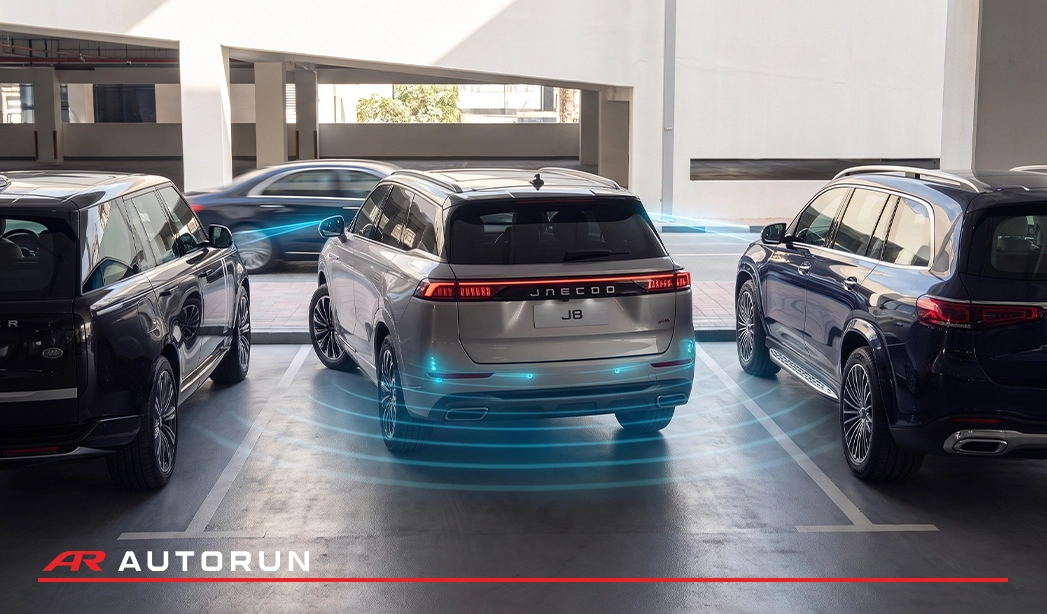
Reversing out of a parking space can be one of the most difficult everyday driving moments. You may be parked between two larger vehicles, beside a wall, near a pillar, or in a busy mall car park where pedestrians, cyclists, scooters, and cars can appear from either side.
A rear camera helps you see what is directly behind the vehicle, but it may not show fast-approaching traffic from the left or right.
This is where Rear Cross Traffic Alert can help.
Rear Cross Traffic Alert, often shortened to RCTA, is a driver-assistance feature designed to warn the driver when traffic may be approaching from the side while the vehicle is reversing. It is especially useful when the driver’s view is blocked by parked cars, SUVs, walls, or other obstacles.
It does not replace checking mirrors, looking around, or reversing slowly. But when used correctly, it can provide an extra layer of awareness in situations where visibility is limited.

What Is Rear Cross Traffic Alert?
Rear Cross Traffic Alert is a safety and convenience feature that monitors the area behind and to the sides of a vehicle when it is reversing.
The system is designed to detect vehicles approaching from either side that may cross behind your car. If it identifies a potential risk, it warns the driver through visual, audible, or vibration alerts.
In many vehicles, the warning appears on the rear camera display or side mirror indicators. The system may also produce a beeping sound or show an alert on the instrument cluster.
Some more advanced vehicles combine RCTA with Rear Cross Traffic Braking or Rear Automatic Braking. In those systems, the vehicle may apply the brakes if the driver does not respond in time. However, not every RCTA system includes automatic braking.

How Does Rear Cross Traffic Alert Work?
RCTA usually uses radar sensors located near the rear corners of the vehicle. These are often the same or similar sensors used for Blind Spot Detection.
When the driver selects reverse, the system begins monitoring the areas to the left and right behind the vehicle.
If another vehicle is approaching from the side, the system estimates its speed, direction, and distance. If the system determines that the approaching vehicle may cross behind your car, it activates a warning.
The driver can then stop, slow down, or wait until the area is clear before continuing to reverse.
The exact detection range and alert timing vary by vehicle, sensor type, and manufacturer calibration.
When Is RCTA Most Useful?
Rear Cross Traffic Alert is most useful in low-speed reversing situations where your side view is blocked.
Common examples include:
- Reversing out of a mall parking space
- Leaving a parking bay between two large SUVs
- Backing out near a wall, pillar, or hedge
- Reversing from a driveway into a street
- Leaving a residential tower or apartment parking space
- Backing out near a busy sidewalk
- Reversing in crowded hotel, school, or supermarket parking areas
In these situations, a driver may not be able to see approaching traffic until the rear of the vehicle is already moving into its path.
RCTA can provide an earlier warning than the driver might get from mirrors or a rear camera alone.
Why RCTA Matters in UAE Driving
Rear Cross Traffic Alert can be particularly useful in the UAE because many daily driving situations involve large vehicles, tight parking areas, and busy pedestrian movement.
In Dubai, Abu Dhabi, Sharjah, and other cities, drivers often reverse out of parking spaces in malls, residential buildings, office towers, supermarkets, hotels, and schools. Visibility may be blocked by SUVs, pickups, vans, pillars, or walls.
The system can also be helpful in underground parking areas, where the driver may have limited sight lines and vehicles can move quickly through narrow lanes.
In hot weather, drivers may also want to reverse quickly and leave the parking area as soon as possible. RCTA adds a useful reminder to pause and check both sides carefully before moving farther back.
Rear Cross Traffic Alert vs Rear Camera
A rear camera and RCTA are different features, and they work best together.
A rear camera shows the area directly behind the vehicle. It helps the driver see parking lines, walls, pedestrians, low objects, and the distance to obstacles behind the bumper.
Rear Cross Traffic Alert focuses on movement from the sides while reversing. It is designed to warn about approaching traffic that may not yet be visible in the camera view.
For example, a rear camera may show that the space directly behind your car is clear. But if another car is approaching from the left side of the parking lane, RCTA may warn you before that car is fully visible on the screen.
The camera helps you see. RCTA helps warn you about crossing movement.
Rear Cross Traffic Alert vs Parking Sensors
Parking sensors use ultrasonic detection to identify nearby objects close to the front or rear of the vehicle. They are useful when manoeuvring close to walls, pillars, kerbs, or parked cars.
RCTA is different. It is designed to detect vehicles approaching from the side while the car is reversing.
Parking sensors are usually better for nearby stationary obstacles. RCTA is usually more useful for moving traffic crossing behind the vehicle.
Both systems are helpful, but they are not interchangeable.
Rear Cross Traffic Alert vs Blind Spot Detection
Rear Cross Traffic Alert and Blind Spot Detection are often related because they may use similar radar sensors.
Blind Spot Detection monitors areas beside and slightly behind the vehicle when driving forward. It warns the driver if another vehicle is in or approaching the blind spot during lane changes.
Rear Cross Traffic Alert works mainly when the vehicle is in reverse. It monitors cross traffic approaching from the sides behind the car.
In simple terms, Blind Spot Detection helps when changing lanes, while RCTA helps when reversing out of spaces.
Can RCTA Detect Pedestrians and Cyclists?
This depends on the vehicle.
Many RCTA systems are primarily designed to detect moving vehicles approaching from the side. Some may also detect bicycles, motorcycles, scooters, or pedestrians, but performance varies significantly between models and conditions.
A pedestrian walking slowly, a child on a small scooter, or a person close to the rear bumper may not always be detected reliably.
For this reason, drivers should not assume that RCTA will identify every person or object behind the vehicle. It should be treated as a support feature, not a substitute for looking carefully before and while reversing.
Does RCTA Automatically Brake?
Some vehicles only provide warnings. Others include Rear Cross Traffic Braking or Rear Automatic Braking.
A warning-only RCTA system may alert the driver with a sound, icon, or message, but it will not stop the vehicle.
A braking-capable system may apply the brakes if it detects a likely collision while reversing and the driver does not react. The system’s strength, timing, and operating conditions vary by vehicle.
Before relying on the feature, drivers should check whether their vehicle has warning-only RCTA or an automatic-braking version.
What Are the Benefits of RCTA?
Rear Cross Traffic Alert can make reversing easier and safer in several common situations.
Better Awareness When Visibility Is Blocked
When parked beside larger vehicles or walls, it can be difficult to see traffic approaching from the side.
RCTA can detect some approaching vehicles before the driver has a clear line of sight.
Less Stress in Busy Parking Areas
Parking areas can be unpredictable. Cars, motorcycles, delivery riders, pedestrians, and scooters may move behind your vehicle while you are reversing.
RCTA gives the driver an additional warning when crossing movement is detected.
Helpful Support for Larger SUVs
SUVs often have higher seating positions, but their size can still make rear-side visibility difficult in tight parking spaces.
RCTA can help drivers of larger vehicles reverse more confidently.
Works Well with Rear Cameras and Sensors
RCTA is most useful when combined with a rear camera and parking sensors.
Together, these systems give the driver visual information, distance warnings, and cross-traffic alerts.
What Are the Limitations of RCTA?
Rear Cross Traffic Alert improves awareness, but it has important limits.
The system may not detect:
- Very slow or stationary objects
- Small children close to the vehicle
- Pedestrians moving slowly
- Bicycles or scooters in some situations
- Vehicles approaching at unusual angles
- Objects outside the sensor range
- Vehicles blocked by walls or other obstacles until very late
- Fast-moving traffic that appears suddenly
- Soft, thin, or unusually shaped objects
Performance may also be affected by:
- Dirty or damaged radar sensors
- Stickers, accessories, or covers near the rear bumper
- Heavy rain
- Dust or sand
- Tight parking angles
- Metallic structures in parking garages
- Steep slopes or uneven surfaces
- Sensor faults or calibration issues
Drivers should always reverse slowly and remain prepared to stop, even if the system does not give a warning.
When Should You Be Extra Careful?
RCTA can be useful, but some situations require extra caution.
Be especially careful when reversing:
- Near schools or family areas
- Around supermarkets and malls
- In residential towers
- Near cyclists or scooter riders
- In hotel drop-off zones
- In underground parking
- From driveways
- Near roadworks
- During poor visibility
- When reversing around large trucks, vans, or SUVs
In these situations, it is best to move slowly, check both sides, use the rear camera and mirrors, and stop immediately if the system warns you.
Is RCTA Available on All Cars?
No. Rear Cross Traffic Alert is common on many modern vehicles, especially higher trims and vehicles equipped with Blind Spot Detection, but it is not standard on every car.
Availability can depend on:
- Brand
- Model
- Model year
- Trim level
- Market
- Driver-assistance package
- Sensor equipment
When comparing vehicles, buyers should check the specification sheet carefully. Some cars may have Blind Spot Detection but not RCTA, while others may offer both as part of a safety package.
What Should You Check Before Buying a Car with RCTA?
Before choosing a vehicle, it is useful to confirm how the system works.
Check whether:
- RCTA is standard or optional
- It is available on the trim you are considering
- It only warns or can also brake
- Alerts appear on the screen, mirrors, or dashboard
- The warning sound is clear
- It works with the rear camera
- It is linked to Blind Spot Detection
- The system can detect cyclists or pedestrians
- The owner manual lists specific limitations
A test drive or parking demonstration can help you understand the alert timing and how clear the warnings are.
Tips for Using Rear Cross Traffic Alert
Use RCTA as an additional warning, not as your only source of information.
Before reversing, check mirrors, look over your shoulder where possible, and review the rear camera.
Reverse slowly so the system and the driver both have more time to react.
Keep the rear bumper area clean and avoid covering sensors with accessories, stickers, or non-approved modifications.
Do not rely on RCTA to detect every pedestrian, cyclist, scooter, shopping trolley, or small object.
If the system gives a warning, stop and check carefully before continuing.
If the system is unavailable or gives repeated false alerts, check the sensor area and consult the owner manual.
Is Rear Cross Traffic Alert Worth Having?
For many drivers, yes.
RCTA is especially useful for city driving, busy parking areas, larger SUVs, and situations where visibility is blocked by other vehicles or structures.
It is not a replacement for careful reversing, but it can provide an important warning at the exact moment when a driver may not be able to see cross traffic clearly.
For UAE drivers who regularly park in malls, residential towers, supermarkets, schools, and underground parking areas, RCTA can be a valuable driver-assistance feature.

Final Thoughts
Rear Cross Traffic Alert helps drivers when reversing out of spaces with limited visibility.
It monitors movement from the sides behind the vehicle and warns when approaching traffic may cross the reversing path. In some vehicles, it may also be paired with rear automatic braking.
The feature is most useful in parking lots, driveways, residential buildings, malls, schools, and underground parking areas.
However, RCTA has limits. It may not detect every pedestrian, cyclist, scooter, stationary object, or fast-moving vehicle. It can also be affected by sensor blockage, dust, rain, or unusual parking angles.
Used correctly, Rear Cross Traffic Alert adds an extra layer of awareness and can make reversing less stressful, especially in crowded everyday driving situations.
