


Parking, turning in tight spaces, and driving over uneven surfaces can be stressful when you cannot clearly see what is around your vehicle. Mirrors help, rear cameras help, and parking sensors help, but each of them has limits.
A 540-degree camera system is designed to give the driver a wider and more useful view of the vehicle’s surroundings.
Most drivers are already familiar with 360-degree camera systems. These use several cameras around the vehicle to create a bird’s-eye view on the central display, making it easier to park, reverse, and move through narrow spaces.
A 540-degree camera system builds on this idea by adding a view of the area beneath or directly around the lower part of the vehicle. This is sometimes described as a transparent chassis or underbody view. It helps the driver understand what may be hidden below the normal camera line, such as kerbs, rocks, potholes, parking blocks, uneven ground, or low obstacles.
The result is not magic and it is not a replacement for careful driving. But when used correctly, it can make low-speed manoeuvres easier, safer, and more confident.
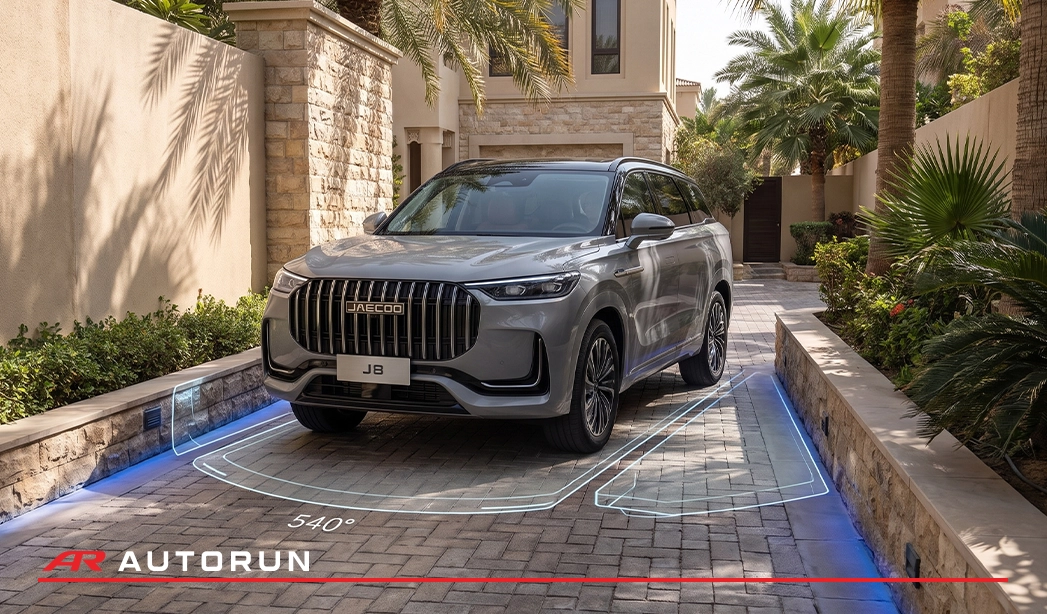
What Is a 540-Degree Camera System?
A 540-degree camera system is an advanced vehicle visibility feature that combines a surround-view camera system with an additional underbody or transparent-chassis perspective.
The “360-degree” part refers to the view around the vehicle. This is usually created using cameras placed at the front, rear, and sides of the car.
The extra “180-degree” idea usually refers to the area below or beneath the vehicle, giving the driver a better understanding of what is happening near the wheels and lower body.
In practice, the system shows the driver a combined view on the infotainment screen. Depending on the vehicle, it may display:
- A bird’s-eye view around the car
- Front and rear camera views
- Side camera views
- Wheel-area views
- A simulated transparent underbody view
- Guidelines for parking or manoeuvring
This can be especially useful when visibility is limited by the height, shape, or size of the vehicle.

How Does a 540-Degree Camera System Work?
The system uses several wide-angle cameras positioned around the vehicle. These cameras are usually located near the front grille, tailgate, and side mirrors.
The vehicle’s software processes the images from these cameras and combines them into a single view. This is what creates the top-down image many drivers see on the centre screen.
For the underbody or transparent-chassis view, the system does not usually rely on a live camera mounted underneath the car. Instead, it often uses camera information captured as the vehicle moves forward and then displays a reconstructed view of the ground beneath the vehicle.
In simple terms, the car uses its cameras to build a visual picture of the area around and below the vehicle, then presents that picture in a way that is easier for the driver to understand.
The exact design varies between manufacturers and models, so the display quality, camera angles, and available viewing modes can differ from one vehicle to another.
Is It Really a Live View Under the Car?
This is an important point.
A 540-degree camera system is often marketed as showing what is underneath the vehicle, but that does not always mean there is a physical live camera under the car.
In many vehicles, the underbody view is a simulated or reconstructed image. It may be based on what the front camera saw moments earlier before the vehicle moved over that area.
This means the display can be very helpful, but it may not show sudden changes, moving objects, or new obstacles that appear after the camera captured the image.
Drivers should treat it as an assistance feature, not as a perfect real-time view of everything beneath the vehicle.
How Is It Different from a 360-Degree Camera?
A 360-degree camera system focuses on the area around the vehicle. It helps drivers see nearby cars, walls, kerbs, pedestrians, parking lines, and other objects around the body of the car.
A 540-degree camera system adds a lower or underbody perspective. This helps with obstacles that may be difficult to judge using a standard surround-view camera.
For example, a 360-degree camera may help you see how close you are to a wall or another car. A 540-degree view may also help you understand where a low kerb, pothole, rock, or parking block is in relation to the wheels and underside of the vehicle.
This extra perspective can be useful for SUVs, off-road-style vehicles, and drivers who frequently deal with tight parking or uneven surfaces.
How Does It Help in Everyday Driving?
A 540-degree camera system is most useful at low speeds, especially when the driver needs to manoeuvre carefully.
Easier Parking
Parking spaces in malls, apartment buildings, hotels, and busy city areas can be tight.
The system helps drivers see the vehicle’s position in relation to parking lines, kerbs, walls, pillars, and nearby cars. This can make parking feel less stressful, especially in larger SUVs.
Better Kerb Awareness
Low kerbs can be difficult to judge from the driver’s seat.
A 540-degree camera system can help show how close the wheels and lower body are to the edge of a kerb. This may reduce the risk of scratching wheels, bumpers, or lower trim.
More Confidence in Tight Spaces
In narrow streets, basement parking, service roads, and crowded areas, drivers often need to move slowly while watching multiple angles.
The surround-view display gives a clearer understanding of the space around the vehicle, which can help when turning, reversing, or passing through a narrow gap.
Help on Uneven Ground
For SUV drivers, the underbody or transparent-chassis view can be useful when moving over uneven surfaces, gravel, sand tracks, or rough ground.
It may help the driver judge the position of rocks, dips, potholes, or raised surfaces in relation to the wheels.
Support for New Drivers
New drivers may find it difficult to judge the size of a vehicle, especially when parking or reversing.
A 540-degree camera system can provide extra visual guidance, helping them understand the vehicle’s position more clearly.
Why It Matters for UAE Drivers
A 540-degree camera system can be especially practical in the UAE because drivers often deal with a mix of city, highway, parking, and outdoor driving conditions.
In Dubai and Abu Dhabi, parking areas can be busy and narrow, particularly in malls, residential towers, hotels, and older urban districts. A surround-view system can make it easier to position the car accurately and avoid low obstacles.
For SUV owners, the feature can also be useful during weekend drives outside the city. Gravel roads, sand tracks, uneven parking areas, and desert-adjacent routes can all include obstacles that are difficult to see from the driver’s seat.
The system is also useful in daily driving situations where visibility is affected by the size of the vehicle. Larger SUVs often have higher seating positions, but their lower front, rear, and side areas can still be difficult to judge.
What Are the Limitations?
A 540-degree camera system improves visibility, but it does not remove every blind spot or detect every hazard.
The system may be limited by:
- Dirty camera lenses
- Dust, sand, or mud
- Heavy rain or water on the camera
- Low light or strong glare
- Poor image quality at night
- Camera distortion from wide-angle lenses
- Moving objects that appear suddenly
- Obstacles outside the camera’s view
- Delays or reconstruction limits in the underbody view
Drivers should also remember that camera displays can affect depth perception. An object may look closer or farther away than it really is, depending on the angle and screen view.
For this reason, the camera system should be used together with mirrors, direct observation, parking sensors, and careful low-speed driving.
Does It Replace Parking Sensors?
No. A 540-degree camera system and parking sensors perform different jobs.
The camera system gives the driver a visual view of the surroundings. Parking sensors use ultrasonic detection to warn when the vehicle is close to certain obstacles.
Cameras help you see. Sensors help alert you.
The best experience usually comes when both systems work together. The camera helps the driver understand the area visually, while sensors provide distance warnings when an object is close to the bumper or sides.
However, neither system is perfect. Small, low, soft, thin, or unusually shaped objects may still be difficult to detect.
Is It Useful for Lane Changes?
A 540-degree camera system is mainly useful for parking, reversing, low-speed manoeuvring, and off-road-style visibility.
It should not be treated as the main tool for lane changes at higher speeds.
For lane changes, drivers should rely on mirrors, shoulder checks where appropriate, and dedicated safety systems such as Blind Spot Detection or Lane Change Assist if the vehicle has them.
Some vehicles may show side camera views when signalling, but this is different from using the 540-degree camera as a full blind-spot safety system.
Is a 540-Degree Camera System Good for Off-Road Driving?
It can be helpful, especially at low speed.
When driving over rough ground, the system can help the driver judge where the wheels are positioned and whether there are rocks, dips, or raised surfaces nearby.
This can make it easier to avoid scraping the underside of the vehicle or placing a wheel badly on uneven ground.
However, it should not be relied on alone for serious off-road driving. Ground clearance, tyre choice, approach and departure angles, traction systems, driver experience, and route selection remain very important.
In sandy or dusty conditions, cameras can also become dirty quickly, reducing visibility on the screen.
Which Vehicles Offer 540-Degree Camera Systems?
A 540-degree camera system is commonly found on selected modern SUVs and higher-trim vehicles, especially those focused on technology, parking assistance, and off-road-style visibility.
OMODA and JAECOO use 540-degree camera technology on selected models and trims in some markets. Availability can vary depending on the model year, market, and trim level, so buyers should always check the exact specification of the vehicle they are considering.
For UAE shoppers, it is best to confirm the feature directly with the dealer, review the model specification sheet, and test the camera system during a showroom visit or test drive.
What Should You Check Before Buying?
Not all 540-degree camera systems feel the same in daily use.
Before choosing a vehicle, check:
- Screen clarity
- Camera resolution
- Day and night visibility
- How quickly the camera view loads
- Whether the view changes automatically when parking
- Whether side and wheel views are available
- How clear the guidelines are
- Whether the underbody view is easy to understand
- How the system works with parking sensors
- Whether the camera lenses are easy to keep clean
A short test drive or parking demonstration can tell you more than the feature name alone.
Is It Worth Having?
For many drivers, yes.
A 540-degree camera system is especially useful if you drive a larger SUV, park in tight spaces, live in a busy city, or often move through narrow areas.
It is also valuable for drivers who want more confidence when judging the size and position of their vehicle.
For off-road-style driving or uneven surfaces, the underbody or transparent-chassis view can provide helpful guidance at low speeds.
It is not an essential feature for every driver, but once you become used to the extra visibility, it can be difficult to go back to a basic rear camera.
Final Thoughts
A 540-degree camera system gives drivers a clearer view of the area around and beneath the vehicle.
By combining surround-view cameras with an underbody or transparent-chassis perspective, it helps with parking, tight manoeuvres, kerb awareness, and low-speed driving over uneven surfaces.
The system is especially useful for SUVs and city drivers, where vehicle size and limited visibility can make manoeuvring more challenging.
However, it is still a driver-assistance feature. Cameras can become dirty, lighting can affect image quality, and the underbody view may be reconstructed rather than fully live.
Used correctly, a 540-degree camera system can add confidence, convenience, and an extra layer of awareness to everyday driving.
